Most organizations are diagnosed by the people being diagnosed.
- A judgement no one can audit.
- Ask a different group of executives and you get a different answer, with nothing on record to say which was right.
- It cannot be repeated.
- Run the same review next year and there is no baseline to compare against, so you cannot tell whether anything improved.
- The method stays private.
- Nobody outside can see how the conclusion was reached, so a board can accept it or reject it, but cannot check it.
What that costs
So we published ours.
The methodology commitment
The scoring method and the weightings are published, not held back as proprietary.
The five maturity bands are derived from the answer scale, not chosen for convenience, and the same boundaries apply to every assessment.
ODX states what it does not measure.
A peer comparison is withheld until the peer group is large enough to support one.
A figure the data has not earned is not rendered. Where a number cannot be supported, ODX says so in words instead.
Where the boundaries come from
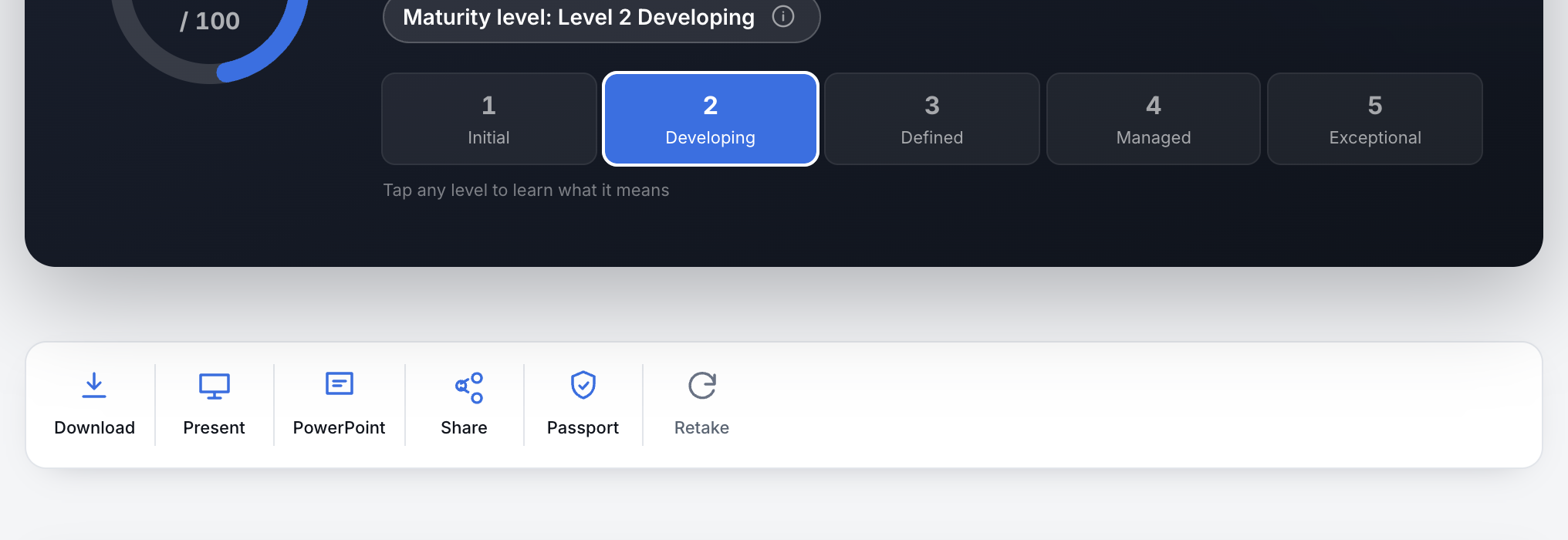
Every question asks how consistently something is done, from never to always. Those five answers score 0, 25, 50, 75 and 100.
- 50
- means "sometimes": the practice exists, but you cannot rely on it.
- 75
- means "often": it holds up.
The five maturity levels are placed around those two turning points, which is why the same boundaries can apply to every assessment.
What you are left holding
A score out of 100, the band it falls in, and the gap to the ODX target standard. Every figure carries the assumption it rests on.
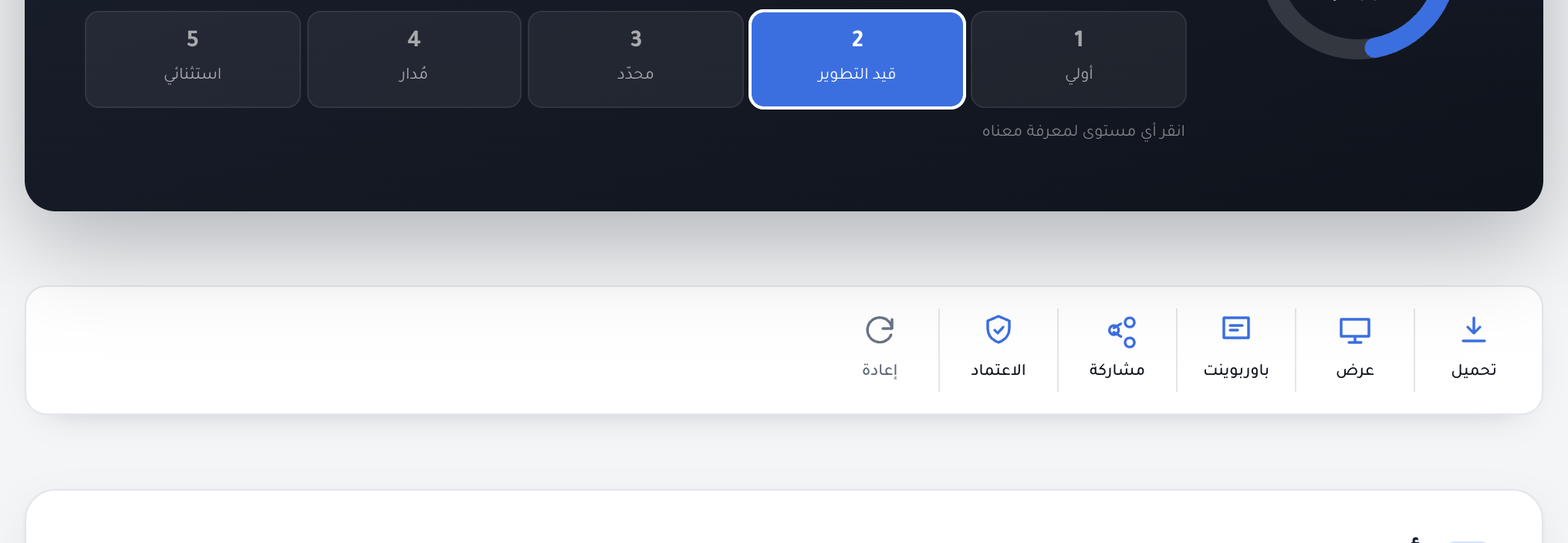
Arabic is not a translation layer
The same screen, both languages, right to left throughout. Reports generate in either.
Where this is going
ODX will become an operating system for enterprise transformation: assessment domains that connect, so a governance finding and a strategy finding read as one picture rather than two reports.
None of this exists yet. It is written in the future tense so it cannot be mistaken for what ODX does today.
Ready to see where your organization stands?
The assessment is open now. No invitation needed to start.